
Digital and Precision Agriculture Lab
Where AI Meets the Field
AI & Digital Intelligence at the Core of Our Research
ABOUT US
Digital and Precision Agriculture Lab (D-PAL) is an AI-first research group dedicated to advancing innovative, data-driven solutions for sustainable and efficient agricultural practices. We integrate artificial intelligence, machine learning, remote sensing, GIS, and IoT to build decision support tools and precision strategies that optimize crop production systems. The research emphasizes site-specific management strategies that enhance productivity while minimizing environmental impacts. By bridging the gap between field-level challenges and technological innovations, the lab contributes to the development of smart farming systems tailored to diverse agro-ecological and hydrological conditions. The lab integrates a comprehensive field-lab-modeling framework, enabling a holistic understanding of soil-water-plant dynamics under variable climatic and management conditions. By combining field experiments, laboratory analysis, and process-based modeling, the lab supports the development of precision strategies that address real-world challenges in water and nutrient management, contributing to resilient and climate-smart agriculture.
Dr. Kumar is an expert in developing AI- and data-driven, water-smart irrigation solutions for site-specific precision water management in changing weather regimes. He has pioneered methods that use machine learning on field and remote-sensing data, together with system-based modeling, to estimate water stress and optimize irrigation decisions during critical crop growth stages. Additionally, Dr. Kumar has devised a novel method for optimizing management zones based field capacity to determine accurate irrigation thresholds and amounts, ensuring the upper water holding capacity of the soils. This approach underscores the necessity of variable rate irrigation as a resilient solution, addressing the challenges of water scarcity during growing seasons. Please reach out at hemendra@umd.edu or pal@umd.edu to discuss the ideas.

Hemendra Kumar
Director, Digital and Precision Agriculture Lab
Precision Agriculture Specialist, College of Agriculture and Natural Resources
University of Maryland, College Park
Mission
To deliver AI-powered, science-based solutions that improve productivity, reduce environmental impacts, and support long-term agricultural resilience through site-specific strategies. We integrate machine learning, remote sensing, GIS, and IoT within a robust field–lab–modeling framework to empower producers, researchers, and decision-makers with precision tools for resource efficiency and environmental sustainability.
Vision
To set the benchmark for AI-driven precision agriculture by designing adaptable, high-impact solutions for real-world crop production challenges. The lab aims to lead in smart, scalable farming systems that combine rigorous field research with advanced analytics and ML. We translate field–lab–modeling insights into tools and strategies for resilient, efficient, and climate-adaptive agriculture.
Events Hosted by D-PAL
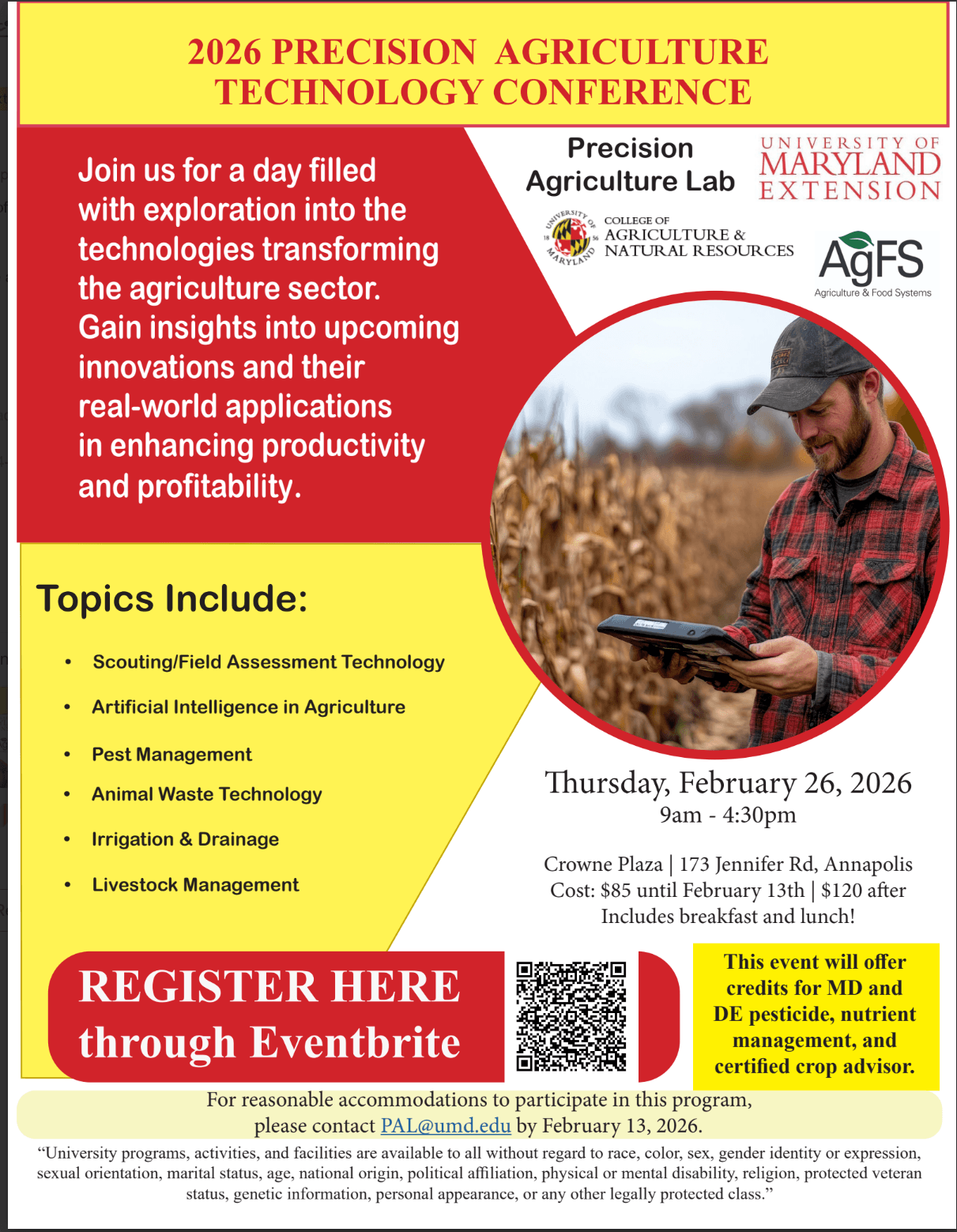
Lab to Host 2026 Precision Agriculture Technology Conference
February 26, 2026 · 9:00 AM – 4:30 PM
Crowne Plaza Annapolis
173 Jennifer Rd, Annapolis
Awarded Research Grants
Precision Irrigation Management for Soybean in Maryland
UAVs and AI for Crop Management and Environmental Sustainability
Drone-Based Spraying for Watermelon in the Mid-Atlantic
Precision Horticulture with UAVs for Ornamental Nurseries
Soil and Water for Irrigation Management in Maryland
Nutrient Load Reductions in Agricultural Drainage
Thematic Research Areas
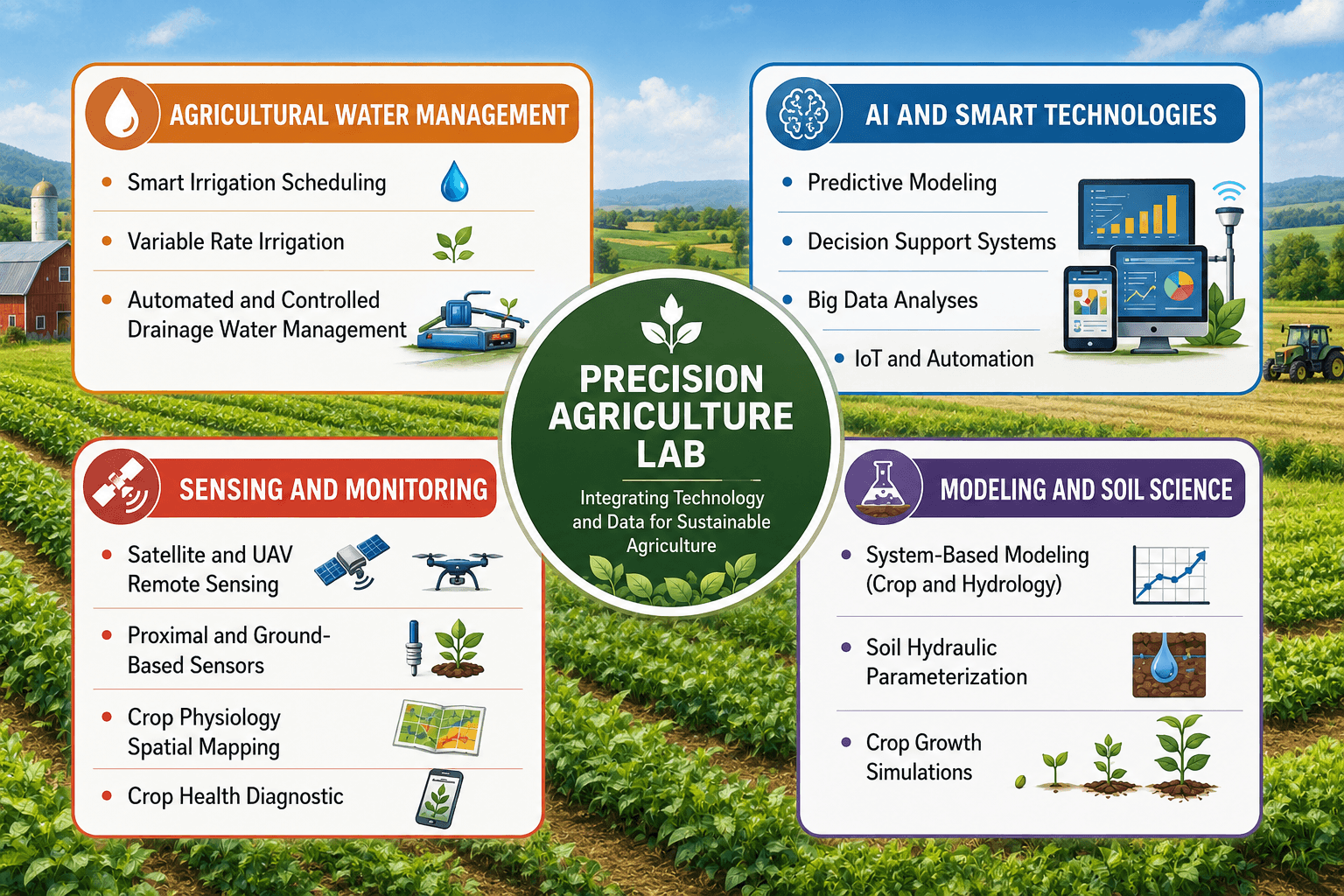
Agricultural Water Management
- Climate-smart irrigation — Adaptive strategies for variable soil and weather.
- Controlled drainage — Optimize retention, reduce nutrient loss.
- System-level scheduling — Data-driven water-use efficiency.
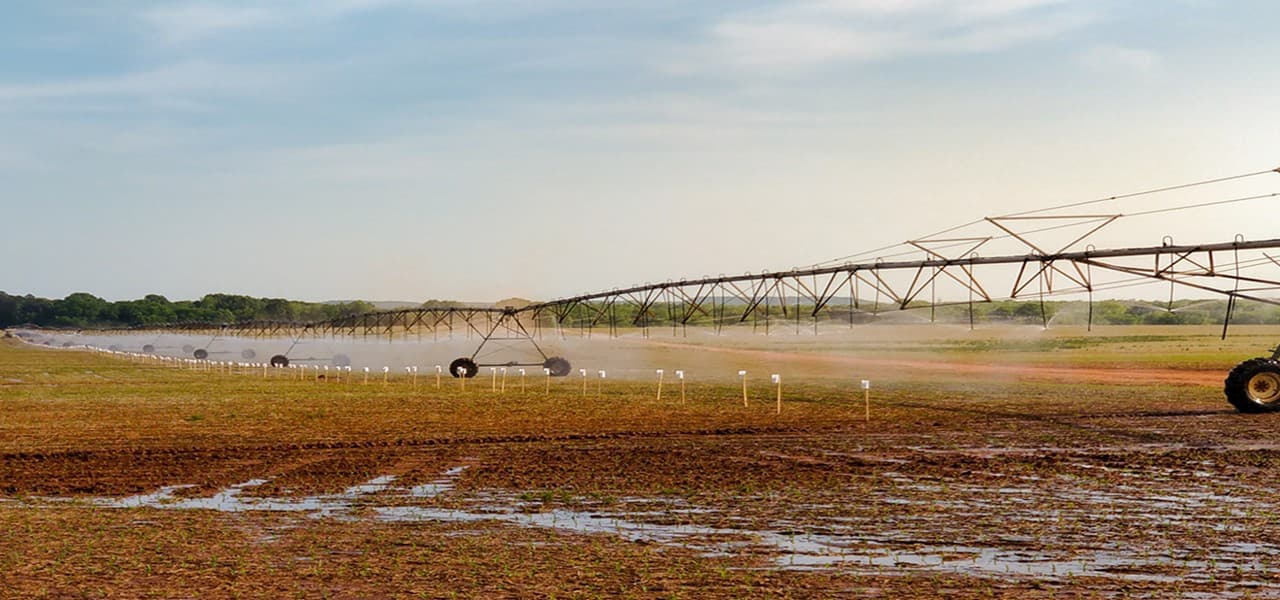
- Variable rate irrigation (VRI) — Site-specific spatially targeted delivery.
AI, Digital Agriculture & Smart Technologies
- AI & Big Data — Predictive modeling, precision decision support, large-scale ML.
- Smart Farming — Digital tools for farm management and automation.
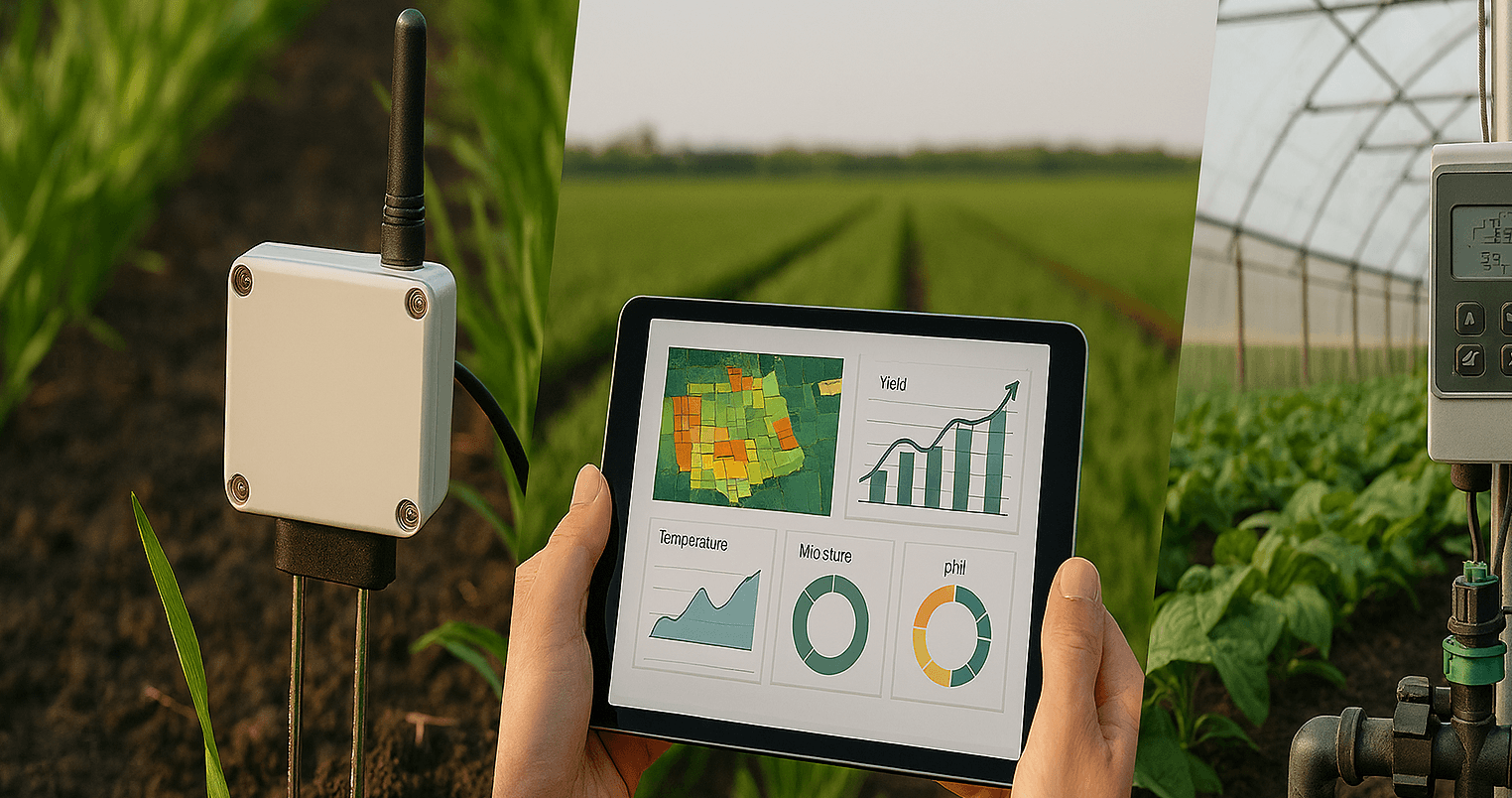
- Remote Sensing, IoT & GIS — Sensor-based monitoring of crop health and variability.
Remote & Proximal Sensing for Agroecosystems
Satellite, aerial (UAV/drone), and ground-based sensors at multiple scales — enabling precision mapping of plant health, water stress, nutrient status, and yield potential for data-driven management.
Modeling and Soil Science
- System-based modeling — Physical + data-driven soil-water-plant simulations.
- Soil Hydraulic Properties (SHPs) — Improved parameterization for crop and hydrologic models.
- Crop Modeling — Process-based models calibrated from lab and field data.
Agricultural Water Management
- Climate-smart & variable-rate irrigation
- Controlled drainage & water table management
- Data-driven system-level scheduling
AI, Digital Agriculture & Smart Technologies
- Predictive modeling & big-data ML
- Smart farming & automation tools
- Remote sensing, IoT & GIS
Remote & Proximal Sensing
Satellite, UAV, and ground sensors enabling precision mapping of plant health, water stress, and yield potential.
Modeling and Soil Science
- System-based soil-water-plant models
- Soil hydraulic property parameterization
- Crop modeling from field & lab data
Our Latest Edited Books
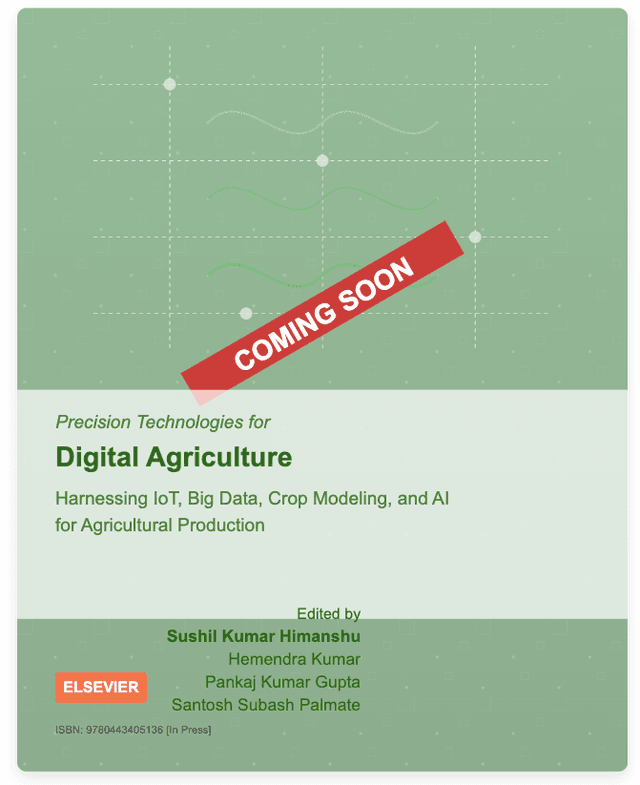
Precision Technologies for Digital Agriculture: Harnessing IoT, Big Data, Crop Modeling, and AI for Agricultural Production
Edited by: Sushil Kumar Himanshu, Hemendra Kumar, Pankaj Kumar Gupta
Publisher: Elsevier, Amsterdam, Netherlands
ISBN: 9780443405136 (In Press)